

12 rules for organizing living room furniture
Arranging living room furniture with television can be a daunting task. When you’re faced with an empty room, filling it in a way that’s practical and aesthetically pleasing around your electronic devices can seem like a daunting task. Would you like to be able to perfectly organize your furniture and appliances? Just follow these rules and you will find that arranging furniture, with or without a TV in the photo, is not so scary.
Consider the most popular furniture layouts
Simplify your options by considering the timeless living room layouts that designers gravitate towards for the most beautiful pieces. Here are some examples of living room furniture arrangements.
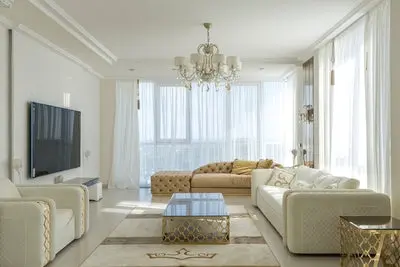
- Symmetrical Layout: A symmetrical layout works in rooms of any size or shape because it visually balances the space. Two opposing sofas separated by a table form a symmetrical arrangement. A sofa flanked by matching chairs is considered symmetrical.
- Floating Arrangement: If you have a living room with lots of windows but not enough wall space to anchor your furniture, opt for a floating layout. Float your furniture a few feet from the walls to create an island in the center of the room with a TV mounted on one wall.
- L-Shaped Layout: An L-shaped living room and dining room combination is considered an awkward space and comes with its own challenges, such as less wall space for furniture and TV placement. There are usually two walls that you can use to place furniture and television. The sofa is placed on the long wall, and the TV can be placed on the wall directly in front of the sofa.
- Irregular Room Layouts: Narrow living rooms, spaces with nooks and crannies, or corner fireplaces are all considered awkward or irregularly shaped rooms. The key to arranging furniture in awkward living rooms is to create zones by using furniture on rugs. You can also anchor an area with a large piece like a dramatic floor lamp.
Choose a focal point
Never ignore the power of a focal point in a room. Sometimes they appear naturally, such as if you have a prominent window or built-in fireplace surround, while other times you may have to create them yourself, such as with TV stands and televisions. Whatever focal point you choose, stick to it. We recommend placing furniture around it as much as possible.
Do not attach furniture to walls
The room’s measurements determine how far you can move your furniture away from the walls, but even in a small space, it’s best to give the furniture some breathing room by leaving a little space between the backs of the furniture and the walls. Despite popular belief, this small space can actually make rooms feel larger. Of course, if you have a larger space, don’t hesitate to arrange the furniture to create conversation areas in the center of the room.
Determination of television positioning
The location of the TV in the living room may depend on its size and some other factors. Here are some suggestions:
- The TV should be placed in an area of the living room that is not affected by sunlight or reflections from natural or other lighting.
- Place your TV out of high-traffic areas. There’s nothing more frustrating than trying to watch TV while people walk by.
- In general, the TV should be placed in front of the seat so that you can watch it comfortably from the sofa or armchairs.
Create conversation areas
People should naturally be able to talk to each other without having to crane their necks or shout across the room. Place sofas and armchairs facing each other, so that they are close enough for people to converse without raising their voices. If the room is too large, create more conversation areas.
Find balance in the arrangement of furniture
Balance is essential in decorating. Consider both the size and location of the different rooms, being careful not to concentrate all the rooms, large or small, in one area. This can make the space feel unbalanced and a little unsettling. Also make sure the shapes are varied. If you have straight seating, for example, consider a round coffee table.
Consider traffic flow
One of the essential elements that should not be overlooked when arranging furniture in a room is circulation. People should not trip over furniture when crossing the room. Make sure there are a few feet (give or take a few inches) between the coffee table and the sofa and between the chairs. Create a clear path so people can walk from one end of the room to the other without difficulty.
Use the right size mats
It’s fine to expose some flooring around the edges of the room, but when using a rug, make sure it’s large enough to rest all of your seating furniture on it.
Get a large coffee table
When it comes to coffee tables, more often than not, bigger is better. It works as an anchor for the room and leaves plenty of room for people to put drinks down or display your favorite accessories. Furthermore, it also offers easier access from surrounding seats. That said, make sure you leave enough space between the seat and the coffee table to allow people to pass through (about 18 inches). And if you can’t find a suitable large coffee table, two smaller tables or other alternatives to coffee tables can be a good substitute.
Place tables within easy reach
Each seat should have easy access to a side table or coffee table. Avoid provisions that require people to move from their seats to deposit or collect drinks. From the perspective of table height:
- Side or end tables should be approximately the same height as the armrests of neighboring chairs (if this is not possible, it is better to lower them).
- As for coffee tables, the height should be less than or equal to that of the chair or sofa seats.
Opt for good lighting
Lighting is one of the most important elements of a room but is too often overlooked. Always use a mix of ambient lighting, floor lamps and table lamps. A floor lamp looks great at the end of a sofa or behind an accent chair. Table lamps look great on coffee tables, shelves and even mantelpieces. Lighting should be placed at different levels to be properly balanced, so use a variety of fixtures liberally throughout the room.
Use the correct size illustration
Any objects (work of art, mirrors or sculptural objects) must be placed strategically and in proportion to the furniture. Don’t hang a small photo on the back of the sofa. Instead, use one large piece that is about two-thirds the length of the sofa or use a group of pieces. If you are dead set on using a particular piece of art that is too small, place it in a larger frame with a large matte around it so it can hold up when placed near a large piece of furniture.
In conclusion, there are several ways to arrange furniture in your living room that you might love. So what are you waiting for to try one now?
latest posts published

How to use corner shelves to optimize space

Current bedding trends and how to do it
10 tips to keep your carpet looking new
Are the sofa beds intended for daily use?

Ideas for decorating the children’s bedroom

Tables best suited to small spaces or

Tables and chairs current design trends

Which sofa to choose when you have a cat?

How to remove stains from carpet?
