

How to organize and arrange tables Stackable coffee tables are versatile and aesthetically appealing items that can add a touch of sophistication to any living space. Their careful arrangement can transform a room into a true oasis of style and harmony. But how do you achieve this perfectly orchestrated look? In this article we’ll walk you through the fundamentals of stacking coffee table layouts, exploring sizes, shapes, materials, heights, colors and patterns. Get ready to discover inspiring tips and ideas for creating a harmonious layout that everyone will admire.
Understand dimensions and proportions
When it comes to organizing stackable coffee tables, size and proportions play a fundamental role in achieving a harmonious look. Imagine yourself in a room where the tables are too large and dominate the space, or too small and seem lost. It’s not very pleasant, is it? To avoid these missteps, take the time to carefully evaluate the dimensions of your room and choose the right tables.
First evaluate the available space. Take precise measurements to know how much space you have for your stackable tables. This way you will avoid ending up with tables that take up all the space or that are pressed against the walls.
Next, consider the proportions. It’s important to find a balance between stackable coffee tables and other furniture in the room. If you have a spacious sofa, opt for medium-large tables to create a balanced view. On the contrary, if you have a smaller space, choose smaller tables to avoid cluttering the room.
Remember, stackable coffee tables are meant to work together. Make sure the different tables match each other in size. Choose tables that fit together well, with subtle variations in height or width. This will add depth and visual interest to your arrangement.
Playing with shapes and materials
The arrangement of stackable tables is not limited to size and proportions. Shapes and materials also play a fundamental role in creating a harmonious and captivating look. So how do you get the most out of these items?
Consider the shapes
Stackable coffee tables are available in different shapes: round, rectangular, oval, square and more. Choosing the appropriate shape will depend on the overall style of your room and your personal preferences. If you have a space with sharp corners and straight lines, square or rectangular tables can create visual harmony. On the other hand, if you have a room with curved and organic elements, round or oval tables will provide softness and aesthetic balance.
Think about the materials
Nesting tables are available in a multitude of materials, such as wood, metal, glass, marble and many others. The choice of materials will depend on the atmosphere you want to create in your room. If you’re looking for a warm, natural aesthetic, opt for wooden tables. If you prefer a contemporary and elegant look, glass or metal tables can be a great choice. You can also consider mixing different materials to create an interesting contrast and add texture to your arrangement.
Play with combinations of shapes and materials
For example, pair a round glass table with a square wooden table to add visual diversity. Or combine stackable tables with similar materials, but different finishes, to create a subtle effect of variation and dynamism.
Experiment with heights and levels
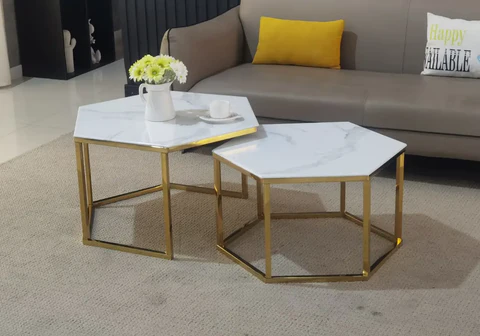
Now that we’ve explored dimensions, proportions, shapes and materials, it’s time to dive into one of the most interesting aspects of stacking coffee table layouts: heights and levels. Playing with these elements will allow you to create a dynamic and captivating visual composition in your space.
Dare to experiment with different heights of stackable tables. You can opt for tables of different heights to create an interesting layering effect. Imagine a large coffee table in the center, flanked by two smaller tables on either side. This combination adds depth to your arrangement and creates a visually appealing focal point. Remember to consider the proportions of your room to avoid taller tables looking overwhelming.
Consider adding additional layers to your agreement. Decorative accessories can play a vital role in creating different visual layers. For example, you can add stacked books, decorative trays, or candles to one of the stacking coffee tables to add height and interest to the overall setting. These items also add a functional dimension by providing space to display personal items or decorative items.
Don’t hesitate to play with the proportions of the accessories you add. Vary the heights and sizes of objects to create a visually pleasing scaling effect. For example, place a small plant on a larger coffee table, next to a taller vase, to create a balanced and harmonious composition
Use colors and patterns for visual impact
When arranging stackable coffee tables, color and pattern are powerful elements to create a stunning visual impact. They add personality, liveliness and coherence to your arrangement. So how can you use colors and patterns to achieve a stunning result?
Start by considering color. Consider your room’s color palette and choose stacking tables that complement it. You can opt for tables in complementary shades, to create a subtle and balanced contrast. For example, if your room is dominated by neutral tones, add stackable coffee tables in bright colors or pastel shades to add a touch of freshness and vibrancy. Make sure the color of the tables blends harmoniously with the rest of the decoration to create a cohesive and welcoming atmosphere.
Next, explore the templates. Nested coffee tables can be a great way to introduce pattern into your space. Whether geometric, floral or abstract designs, choose tables with designs that fit the overall style of your room. Patterns can provide an interesting visual dimension and add personality to your arrangement. Don’t be afraid to mix patterns for an eclectic and original look, as long as the colors and scales are consistent.
You can also use cushions, rugs or decorative accessories to reinforce the patterns of your stackable tables. This creates visual continuity and a sense of harmony throughout the room. For example, if you have tables with a geometric pattern, choose cushions or rugs with the same pattern to create a cohesive and coordinated environment.
By carefully arranging the stackable tables you can transform your living space into a harmonious and captivating place. By playing with sizes, shapes, materials, heights, colors and patterns, you can create a composition that reflects your personal style and is admired by all. So let your creativity express itself and have fun creating your perfect composition.
latest posts published

How to use corner shelves to optimize space

Current bedding trends and how to do it
10 tips to keep your carpet looking new
Are the sofa beds intended for daily use?

Ideas for decorating the children’s bedroom

Tables best suited to small spaces or

Tables and chairs current design trends

Which sofa to choose when you have a cat?

How to remove stains from carpet?
